Repurposing Agricultural Public Support for a Sustainable Food System: Policy Reform Consultancy for TARAPS (SD/TARAPS-C2-MoA/03)
Project Overview
The Technical Assistance for Repurposing of Agricultural Public Support Towards a Sustainable Food System Transformation in Bangladesh (TARAPS) is implemented by the Department of Agricultural Extension under the Ministry of Agriculture and financed by the World Bank. Under its policy reform component, the project seeks to help the Ministry prepare a strategic framework that strengthens its capacity for evidence-based, adaptive, and efficient policy decisions by tracking public expenditure, policy supports, and agency MIS data, including PARTNER MIS.
The consultancy is delivered by a joint venture of Training and Technology Transfer (TTT) and Business Initiative Leading Development (BUILD), in association with TRACE Consulting. Over 7.25 months, the team will review agricultural policies and institutions, map public expenditure down to the sub-national level, assess existing projects and programs, and develop costed reform options, including a strategy for repurposing subsidies and incentives. The work also covers institutional strengthening, training for ministry staff, and an IT-based monitoring tool for policies, programs, and public expenditure.
The assignment is built around twelve deliverables, from the inception report to a final policy reform report and implementation action plan, and is aligned with national plans and priorities such as Delta Plan 2100 and the SDGs. Throughout, the team consults stakeholders and validates findings with the Ministry so that the resulting framework is practical to adopt and sustain.
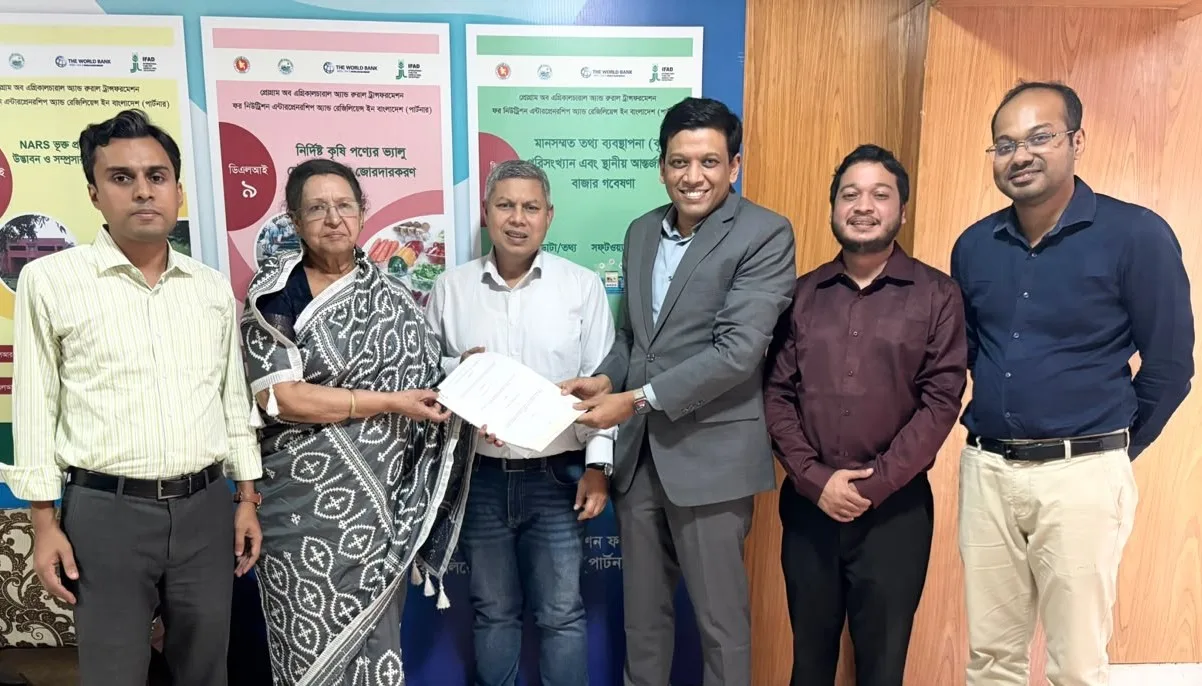
Project Details
Scope of Services:
- Policy Review & Reform Support: Mapping the policy and regulatory landscape, screening policies for coherence and gaps against national and international frameworks, appraising costed reform options, and preparing drafting and justification support for decision-makers.
- Institutional Strengthening & Subsidy Administration Reform: Assessing existing projects, programs, and initiatives across DAE, BADC, BCIC, and BMDA on relevance, effectiveness, efficiency, and sustainability, and recommending corrective and institutional responses.
- Public Expenditure & Impact Monitoring System: Classifying and mapping agricultural public expenditure, including at the upazila level and linked to BBS outcome data, and building an IT-based monitoring tool fed by agency MIS, with user-acceptance testing and an annual review mechanism.
- Capacity Building & Knowledge Products: Assessing training needs, delivering four applied training modules for Ministry staff, producing at least six policy notes and issue briefs, and handing over the dashboard and policy implementation toolkit.
- Stakeholder Consultation & Validation: Holding the kick-off meeting and inception workshop, field consultations, validation sessions, and management decision gates, and documenting all consultations in dedicated reports.
- Reporting & Handover: Delivering the twelve ToR deliverables, including the Final Policy Reform Report and Implementation Action Plan, with exit and handover arrangements for each activity.
Key Outcomes
- Evidence-Based Policy Decisions: A strategic framework and costed reform options that help the Ministry of Agriculture make adaptive and efficient decisions on agricultural public support.
- Transparent Public Expenditure Tracking: A classified, sub-national view of agricultural spending linked to outcomes, supported by an IT-based monitoring tool.
- Better-Targeted Public Support: Assessment of existing programs and a strategy for repurposing subsidies and incentives towards a sustainable food system.
- Policy Coherence: Policy review and gap analysis aligned with national plans and international obligations.
- Strengthened Institutional Capacity: Training, policy notes, and a policy implementation toolkit that equip Ministry staff to sustain the framework after handover.