Time Release Study at Key Custom Houses: Strengthening Evidence-Based Customs Modernization in Bangladesh (SD-13)
Project Overview
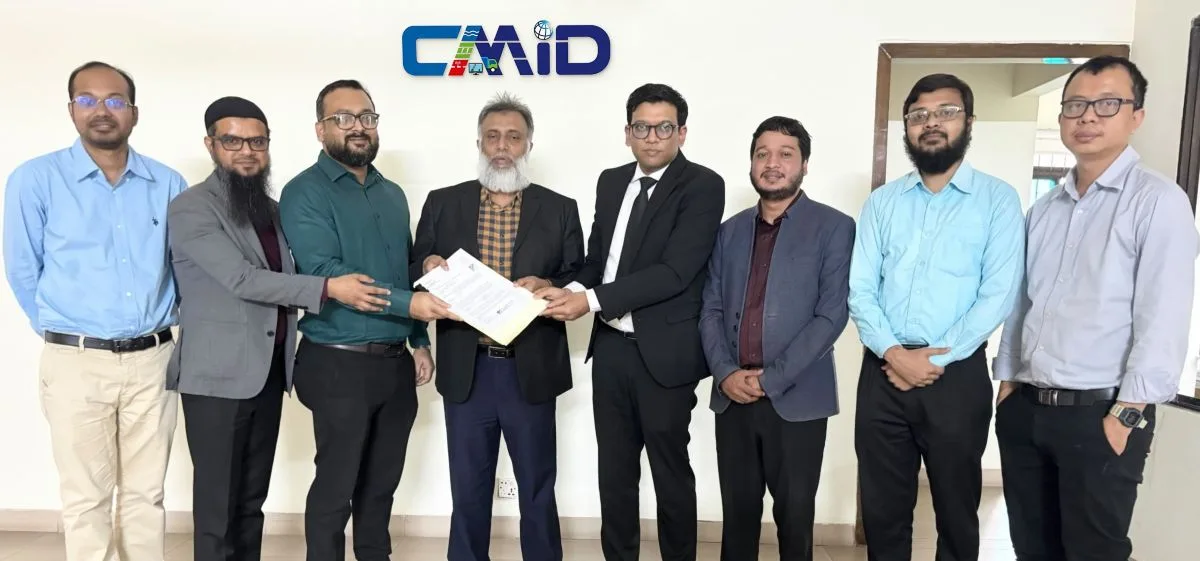
The Time Release Study (TRS) at Key Custom Houses is being implemented by the National Board of Revenue (NBR) under the Customs Modernization and Infrastructure Development (CMID) Project, part of the World Bank-financed ACCESS – Bangladesh Phase 1 Project. The assignment will measure and analyze cargo clearance times across six major customs locations and identify practical opportunities to improve the efficiency and predictability of border clearance.
TRACE Consulting is contributing to the assignment as a sub-consultant to the TTT Global-led JV. The assignment will be led by Mr. Md. Masud Sadiq, Senior Trade Facilitation, Customs & Trade Policy Lead at TRACE Consulting, serving as Team Leader.
Over 21 months, the project will undertake baseline, midline, and end-line TRS cycles at Chattogram Seaport, Dhaka Airport, Benapole, Bhomra, and Burimari Land Ports, and ICD Kamalapur. Using the World Customs Organization (WCO) TRS methodology, the study will measure actual release times, analyze each stage of the clearance process, assess progress against the 2022 TRS, and identify bottlenecks and redundant procedures affecting trade.
The assignment supports Bangladesh’s implementation of Article 7.6 of the WTO Trade Facilitation Agreement, which encourages Members to periodically measure and publish average release times.
Project Details
Scope of Services
Release-Time Measurement: Measure overall and stage-wise cargo release times for selected imports and exports, covering the period from arrival or declaration through physical release.
Customs Location Assessment: Conduct TRS activities at Chattogram Seaport, Dhaka Airport, Benapole, Bhomra, and Burimari Land Ports, and ICD Kamalapur.
Commodity-Specific Analysis: Assess clearance performance for imports of food items, pharmaceutical raw materials, garment raw materials, and capital machinery, and exports of green vegetables, apparel, leather goods, and pharmaceuticals.
Methodology & Sampling: Develop and pre-test WCO-aligned survey instruments, apply Probability Proportional to Size (PPS) sampling, and use system-generated data including ASYCUDA World timestamps alongside field-level data collection.
Process Mapping & Bottleneck Analysis: Map end-to-end clearance processes, identify delays, redundant steps, and non-value-adding activities, and analyze their contribution to overall release time.
2022 TRS Progress Review: Assess implementation of recommendations from the 2022 TRS and measure changes in clearance performance since the previous study.
Stakeholder Engagement & Capacity Building: Engage customs, port authorities, regulatory agencies, importers, exporters, customs brokers, freight forwarders, and other stakeholders, while providing training for enumerators and data providers.
Reform Recommendations & Implementation Tracking: Develop actionable recommendations, service improvements, and an online mechanism for tracking implementation of TRS recommendations, responsible agencies, timelines, and progress.
Validation & Dissemination: Conduct validation and dissemination workshops across baseline, midline, and end-line cycles and prepare reports, policy briefs, presentations, and communication materials.
Key Outcomes
- Evidence-Based Clearance Benchmarks: Reliable measurement of release times and process-stage performance across six major customs locations.
- Clear Identification of Bottlenecks: Evidence on delays and redundant procedures across customs, regulatory agencies, ports, and other border actors.
- Measured Reform Progress: Comparison of performance against the 2022 TRS and across baseline, midline, and end-line cycles.
- Actionable Customs Reform: Practical recommendations to reduce release times, improve predictability, and strengthen border-management efficiency.
- Stronger Institutional Capacity: Improved capability of NBR and relevant stakeholders to conduct, interpret, and use TRS findings for continuous performance improvement.
- Sustainable Monitoring: Systems and tools to support ongoing tracking of TRS recommendations and future release-time measurement.