Strengthening Export-Oriented Textile Testing Capacity at BSTI Laboratory
Project Overview
Bangladesh’s Ready-Made Garment (RMG) sector, a cornerstone of its export economy, faces increasingly stringent international requirements for product integrity, chemical safety, sustainability, and lead times. To strengthen domestic conformity assessment, TRACE Consulting partnered with the Bangladesh Standards and Testing Institution (BSTI) to assess and promote its ISO/IEC 17025:2017-accredited Textile Testing Laboratory, aligning its services with the expectations of global brands, buying houses, and exporters.
The technical assessment evaluated BSTI’s specialized testing units against leading third-party laboratories and buyer test packages for knitwear, woven, denim, and sweater products. While recognizing BSTI’s core testing capabilities and leadership in national Inter-Laboratory Comparisons (ILC), the assessment identified critical gaps in advanced Restricted Substance List (RSL) testing, infrastructure, turnaround times, and digital reporting.
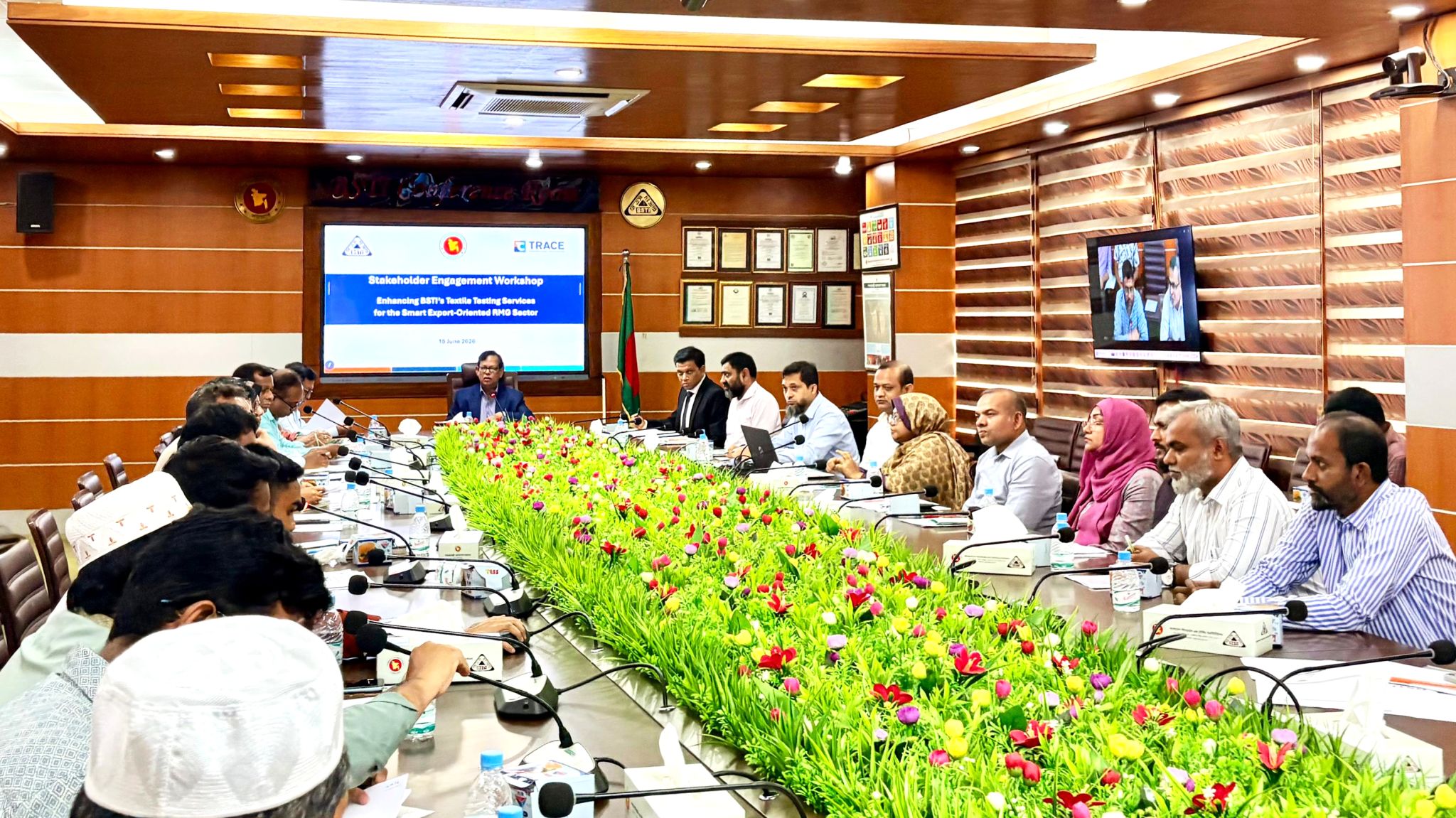
To validate these findings, TRACE surveyed over 30 supply chain decision-makers and organized a Stakeholder Engagement Workshop in June 2026 with BSTI, BGMEA, BKMEA, BGBA, buying houses, laboratories, and global brands to identify barriers to report acceptance and buyer nomination.
The project delivered a phased strategic roadmap covering advanced chemical testing instruments (LC-MS/MS and GC-MS/MS), cloud-based LIMS with QR verification, expedited testing services, dedicated customer support and sample collection, and ISO/IEC 17043 Proficiency Testing Provider (PTP) accreditation. These strategic interventions aim to retain domestic testing revenue, reduce export lead times, enhance buyer confidence, and strengthen Bangladesh’s National Quality Infrastructure (NQI).
Project Scopes
- Evaluated the current capacity of the BSTI textile testing facilities as per the requirement of international buyers.
- Mapped the technical, procedural, and branding criteria of major buyers and global testing agencies. Compared BSTI's technical and management systems against the best international practices and buyer expectations. Identified institutional and perception-related gaps, such as trust, service speed, and digital reporting capabilities.
- Conducted targeted interviews with buyers, exporters, BGMEA/BKMEA, and international testing agencies to gather critical insights regarding the barriers to test report acceptance.
- Facilitated a workshop engaging buyers and relevant stakeholders to share findings and actively promote BSTI's services.
Key Outcomes
- Identified significant industry awareness gaps and operational bottlenecks driven by strict international buyer nominations, highlighting the need for stronger market positioning of BSTI's accredited capabilities.
- Formulated a comprehensive strategic roadmap aimed at capturing a larger share of the domestic testing market, thereby retaining substantial capital within the national economy and boosting export competitiveness.
- Recommended targeted laboratory infrastructure and equipment upgrades to ensure metrological precision, enhance occupational safety, and align with international testing environment standards.
- Proposed the modernization of customer service operations by establishing a dedicated B2B service point with tiered, fast-track delivery options to meet the urgent, time-sensitive demands of the export sector.
- Proposed the strategic modernization of laboratory operations through the integration of an enterprise-grade Laboratory Information Management System (LIMS) featuring barcode-based sample tracking and secure QR code report verification.
- Recommended the implementation of a streamlined sample logistics and pick-up service across key industrial zones to reduce operational friction and improve accessibility for local exporters.
- Proposed expanding BSTI's technical testing scope to include advanced chemical safety and sustainability parameters, ensuring direct alignment with the evolving compliance mandates of major global brands.
- Recommended establishing a nationally accredited Proficiency Testing (PT) program to support local laboratories, reducing reliance on costly foreign providers and strengthening the overall national quality infrastructure.
Have a project in mind? Let's build something that lasts
Whether reforming a regulatory system, building technical
capacity, or modernising digital infrastructure, we would like to
hear from you.